Domaine Hubert Lamy
Chassagne-Montrachet 1er Cru
Les Macherelles 2017
“Olivier Lamy sources his Macherelles from a 0.16ha block on the northwestern side of Chassagne, very close to the lower part of the village on stony limestone. This has more power and structure than some of his St-Aubin wines, which tend to be pithier and more ethereal. Leesy, tangy and with classic struck-match aromas, this is aniseedy and rich with layers of flavour and good ageing potential. Drinking Window: 2021-2027. (Nov 2018)” – 93/100, Tim Atkin, Decanter
VARIETIES: Chardonnay
REGION: Chassagne-Montrachet, Côtes de Beaune, Burgundy, France
AGEING: 12 to 18 months in barrel, depending on the vintage and cuvée
GUARDING POTENTIAL: Enjoy now or will cellar well up to 20 years
SERVE: Serve at 6 – 8ºC
FITS TO: Sits well with Tartine de Foie Gras, Langouste Gratinée, Poularde Rôtie au Four, Toro Tartare or cheese like Époisses / Roquefort
CRITICS SCORES: DE/93, JM/91
VIVINO: Average 4.2 ★★★★✰
___________________________________________________
Overview | Of | Domaine Hubert Lamy
The Lamy family has been working in the vineyards since 1640. Domaine Hubert Lamy was created by Hubert Lamy in 1973. Before creating his own domaine Hubert worked with his father, Jean Lamy. At that time the domaine was around 8 hectares in size, planted mainly in ‘regionale appellations’.
Most of the development of the Domaine was during the 1990’s when new vines were bought or rented (Clos de la Chatenière, Derrière Chez Edouard, Murgers des dents de Chien, Clos du Meix, Santenay Clos des Hâtes) or planted (En Remilly). Some parcels which were planted with Pinot Noir vines were changed to Chardonnay vines because it was considered this was a better choice for the soil type (La Princée).
Olivier Lamy, having first studied winemaking and commerce, joined the Domaine in 1995. Prior to joining his father he did training courses in several other Domaines and tasted wines from all over the world. With this experience he was able to bring new ideas and new methods of working in the vines and in the cellar.
Today the Domaine has 18.5 hectares of vines – 80% in Chardonnay and 20% in Pinot Noir. The vines are in several appellations – Saint-Aubin, Puligny-Montrachet, Chassagne-Montrachet and Santenay. There are 20 appellations in total and the Domaine produces around 110,000 bottles per year.
Vinfication in white: White grapes arrive in the vathouse and are put in the press via a conveyor belt. The grapes are pressed and the juice is transferred to a stainless steel vat for 1 night for settling. The next day the clear juice descends, via a gravity system, into the cellar and is put in the barrels. The barrels are 300 litres and 600 litres (“demi-muid”) in capacity.
Vinification in red: Red grapes are sorted on a vibrating sorting table. They are then transferred into the destemmer and then into cement vats via a conveyor belt. The alcoholic fermentation process starts during the next 3 – 10 days. The most is then devatted and pressed, the juice is settled for one night and is then transferred into the barrels for ageing.
The wine is bottled after approximately 18 months of maturing in the barrels.





 CLOUDY BAY TE KOKO SAUVIGNON BLANC
1 × RM234.90
CLOUDY BAY TE KOKO SAUVIGNON BLANC
1 × RM234.90  FLEUR DU CAP PINOTAGE
1 ×
FLEUR DU CAP PINOTAGE
1 ×  NUGAN ESTATE MCLAREN VALE MCLAREN PARISH VINEYARD SHIRAZ
1 ×
NUGAN ESTATE MCLAREN VALE MCLAREN PARISH VINEYARD SHIRAZ
1 × 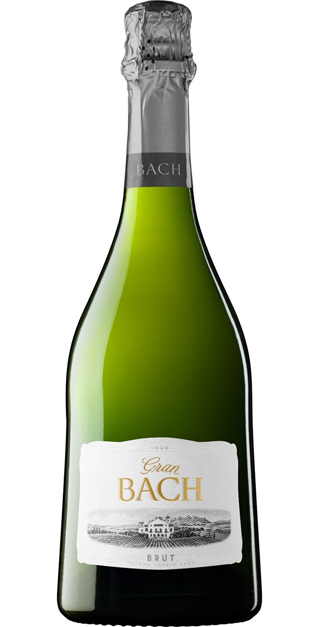 GRAN BACH BRUT CAVA
1 × RM139.00
GRAN BACH BRUT CAVA
1 × RM139.00  CLOUDY BAY PINOT NOIR
1 × RM164.90
CLOUDY BAY PINOT NOIR
1 × RM164.90  CHANDON BRUT ROSE NV
1 × RM174.90
CHANDON BRUT ROSE NV
1 × RM174.90