




France

Despite their own complacency, occasional arrogance and impressive challenges from all-comers, France is still far and away the finest wine producing nation in the world. Its famous regions – Bordeaux, Burgundy, Champagne, Loire, Rhône, Alsace and increasingly Languedoc Roussillon – read like a desert island disc of fine wines, a who’s who of everything you could ever want from a wine.
Full-bodied, light-bodied, still or fizzy, dry or sweet, simple or intellectual, weird and wonderful, for drinking now or for laying down, France’s infinitesimal variety of wines is one of its great attributes. And that’s without even mentioning Cognac and Armagnac.
France’s grape varieties are grown, and its wines copied, throughout the world. It also brandishes with relish its trump card, the untranslatable ‘terroir’ that shapes a wine’s character beyond the ken of human knowledge and intervention. It is this terroir – a combination of soil and microclimate – that makes Vosne-Romanée taste different to Nuits St Georges, Ch. Langoa-Barton different to Ch. Léoville-Barton.
France is a nation with over 2000 years history of winemaking, where the finest grapes and parcels of land have been selected through centuries of trial and error, not through market research. Its subtleties are never-ending and endlessly fascinating. Vintage variation is as great here as anywhere – rain, hail, frost and occasionally burning heat can ruin a vintage. But all this creates interest, it gives the wines personality, and generates great excitement when everything does come together.
However, this is not to say that French wine is perfect. Its overall quality remains inconsistent and its intricate system of classification and appellation controlée based on geography rather than quality is clearly flawed. Appellation Contrôlée is one of France’s great attributes but can also act as a straitjacket to experimentation and improvement.
Nevertheless, the future is bright for France; quality is better than ever before – driven by a young, well-traveled, ambitious generation of winemakers – while each year reveals new and exciting wines from this grand old dame.
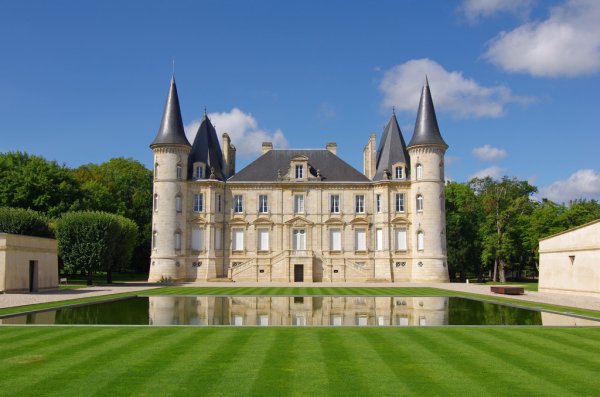 Bordeaux remains the centre of the fine wine world. The maritime climate on the 45th parallel provides for temperate winters and long warm summers, perfect conditions for growing grapes suited to the production of classically constructed, long-lasting wines. This vast region of 120,000ha of vineyards (four times the size of Burgundy) is home to 10,000 wine producers and 57 different appellation contrôlées. Red now makes up 88% of Bordeaux wine, and is usually referred to as claret. The origin of this name was to differentiate the lighter-colored wines of the coastal region from the deeper “black” wines from up-country regions.
The “Left Bank”, comprising the wine regions of the Médoc, Pessac-Léognan and Graves are planted predominantly with Cabernet Sauvignon, which thrives on the gravelly soils left by the ancient course of the river. This is a thick skinned variety which ripens late, producing powerful, tannic wines capable of long ageing. It is blended with Merlot, Cabernet Franc and sometimes Petit Verdot. The highlights of the Médoc are the four communes of St Estèphe (blackcurrant concentration); classical, cedarwood and cigar-box Pauillac; richly fruited St Julien; and elegant, fragrant Margaux.
On the “Right Bank”, most famously in St Emilion and Pomerol, it is the fleshy Merlot grape which predominates, sometimes supported by cabernet franc. Here the soils are more mixed, with gravel and clay underpinning the rich, fruity wines of Pomerol. Styles vary more in St Emilion, depending on the predominance of sand in the lower lying slopes, or limestone on the hillsides and plateau.
By the 18th century, individual properties – known as châteaux, however humble – were becoming known for the quality of their wines and in 1855, those of the Médoc (plus Haut Brion, a property commended by Samuel Pepys as early as 1663) were classified into five levels of classed growths. Lafite, Latour, Margaux and Haut Brion were cited as First Growths, to whose ranks Mouton Rothschild was elevated by presidential decree in 1973. Beneath the ranks of the classed growths lies a raft of fine châteaux known as Crus Bourgeois, while a host of less well known “petits châteaux” still makes attractive, enjoyable claret at affordable prices.
The other jewel in the Bordeaux crown is the district of Sauternes, making some of the most outstanding sweet white wines in the world (from the likes of Châteaux d’Yquem, Rieussec and Climens). The foggy autumn mornings along the banks of the Garonne River near Sauternes and neighbouring Barsac enable the noble rot, botrytis cinerea, to form on the skins of the grapes, which can still ripen in the afternoon sun as late as the end of October or early November. The Sémillon grape is the prime component, but Sauvignon Blanc and a little Muscadelle are also planted to provide insurance if the weather is less favourable to Sémillon, as well as a counterpoint in flavor.
There are many inexpensive dry white wines – more Sauvignon than Sémillon – from regions such as Entre Deux Mers and the Graves, with just a handful of outstanding properties located in Pessac-Léognan. Most famous of the great dry whites are Châteaux Haut Brion, Laville Haut Brion and Domaine de Chevalier.
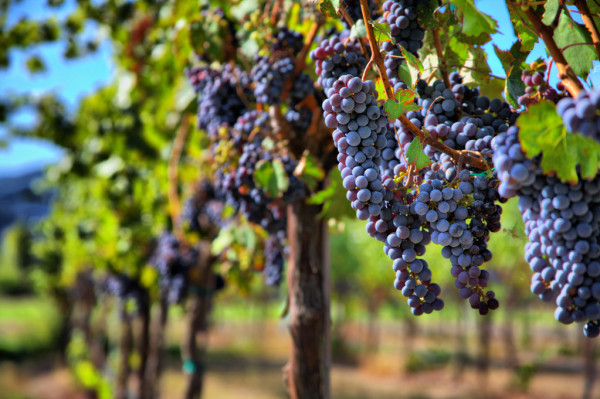
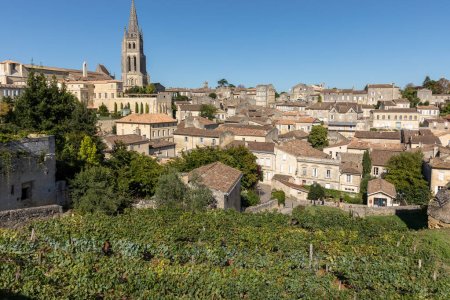
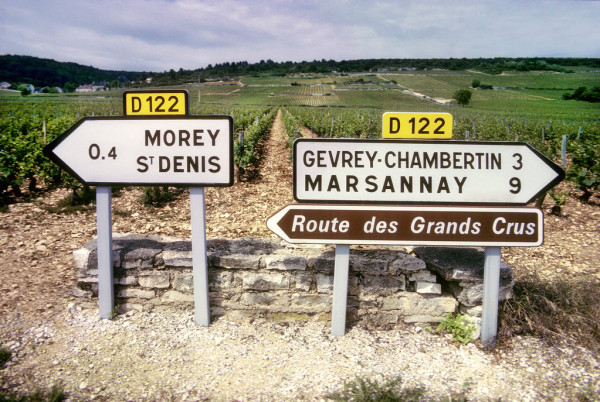 Burgundy never quite achieved its political ambitions of being a kingdom in its own right, but for many, the region produces some of the most regal red and white wines in the world.
In Burgundy there are 100 different appellations, numerous individual vineyards and more than 3,000 individual producers. Around 15 million cases are produced annually from 26,500ha of vines in Burgundy, which is usually sub-divided into five regions: Chablis in the Yonne department; the Côte de Nuits and Côte de Beaune in the department of the Côte d’Or; and the Chalonnais and Mâconnais in the Saone-et-Loire.
The world’s most famous white wine grape may have originated in Burgundy, where there is a village called Chardonnay (near Mâcon). This marvelous, full-bodied grape responds well to barrel ageing and can produce wines of great complexity which can age for decades. More often than not though, in recent times, the wines are better drunk young. The simpler white wines of Chablis to the north and the Mâconnais in the south are usually made in stainless steel to preserve freshness.
The heartland for white burgundy is the Côte de Beaune with its three great villages, Meursault, Puligny-Montrachet and Chassagne-Montrachet. Here the vineyard classification system really comes into its own. On the flattest land, the wines will be classed only as generic Bourgogne Blanc; as the slope begins to rise the wines are designated by the name of their village. At mid-slope the finest vineyards, whose wines will be bottled separately, are categorized as premier cru (eg. Meursault, Charmes) or grand cru (Le Montrachet).
Though attractive wines can be found in the Chalonnais (Mercurey, Givry), the great red wines of Burgundy are found in the Côte d’Or. The line of magical villages which constitutes the Côte de Nuits, Gevrey-Chambertin, Morey St Denis, Chambolle-Musigny, Vougeot, Vosne-Romanée and Nuits-St Georges is like a roll call of great names. The Côte de Beaune competes through such gems as Volnay and Pommard, adjacent but contrasting villages: lacy elegance for the wines of Volnay, sturdy and more structured wines from Pommard.
Whereas Burgundy used to be considered a minefield because of the complexity of choice, these days it is more of a playground for the adventurous wine lover, thanks to the vast increase in number of quality-conscious, properly trained producers.
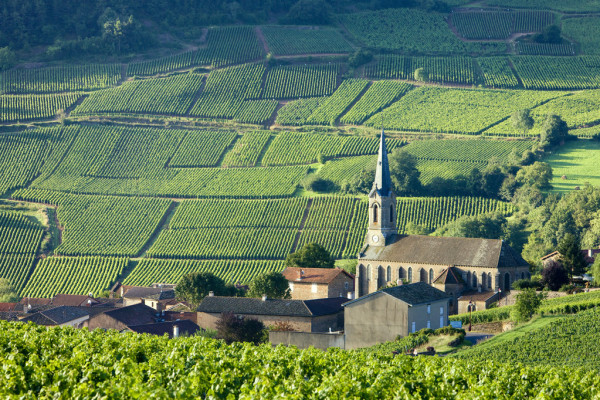
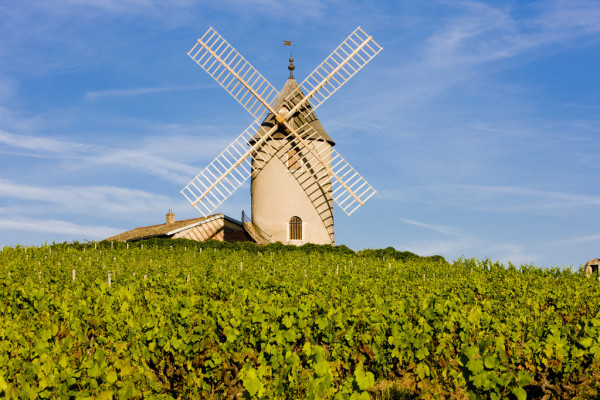
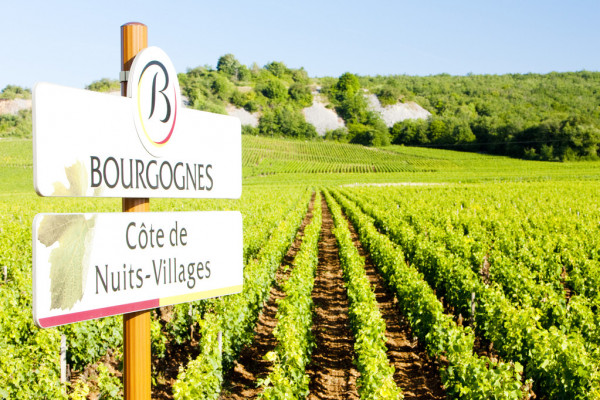
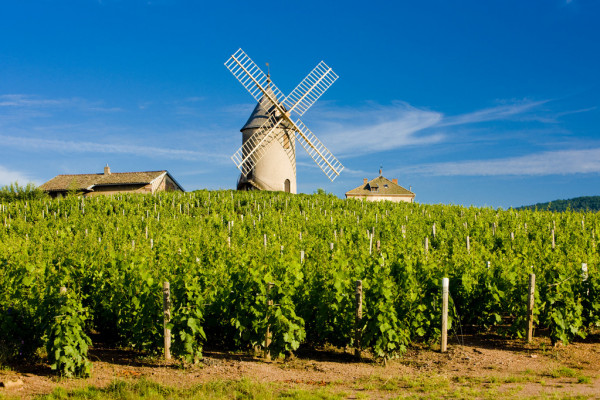 The Beaujolais region occupies 22,000 hectares between Mâcon and Lyon, and covers 34 miles north to south. 70m litres of Beaujolais are produced each year, two and a half times the entire red and white wine production in the rest of Burgundy put together! More than half of this is sold as Beaujolais Nouveau, released on the 3rd Thursday of November after the harvest.
Beaujolais is almost exclusively planted with the Gamay grape, and produces mostly red wines. A small amount of white Beaujolais is produced from Chardonnay (or Aligoté) while a handful of Beaujolais rosés can also be found.
It is one of life’s injustices that this beautiful wine region is forever associated in most people’s minds with Beaujolais Nouveau, a thin and dilute wine that has more to do with marketing than actual substance. However there is an Aladdin’s horde of gloriously satisfying wines to be found amongst the 10 named village Crus that form the spiritual home of the fresh, fruity Gamay grape.
From north to south, St Amour, Juliénas, Moulin-à-Vent, Chénas, Fleurie, Chiroubles, Morgon, Régnié (a Cru since 1988), Brouilly and Côte de Brouilly are situated along the 15 mile strip of granite hills to the north of the region. They range from light, lively and fragrant to rich and velvety. While most Beaujolais should be drunk as soon as possible the Crus are infinitely more concentrated and have much more personality. They can be kept for up to 10 years at which age the best examples resemble mature Pinot Noir.
At its best simple Beaujolais is fruity and eminently drinkable, especially lightly chilled in summer. Most Beaujolais displays a pear-drop edge to its soft red fruit, and often notes of banana and bubble gum too. These traits come largely from the vinification method (semi-carbonic maceration) rather than the Gamay grape itself, where a swift fermentation highlights the aromatics and fruit while minimizing the tannins. Amongst the top Crus, however, there has been a return to more traditional Burgundian vinification methods and even oak ageing.
There are five classifications of Beaujolais: Beaujolais Nouveau, Beaujolais, Beaujolais Supérieur, Beaujolais Villages, and the 10 Beaujolais Crus. As with the rest of Burgundy, the producer’s name on the bottle is often the most important factor.
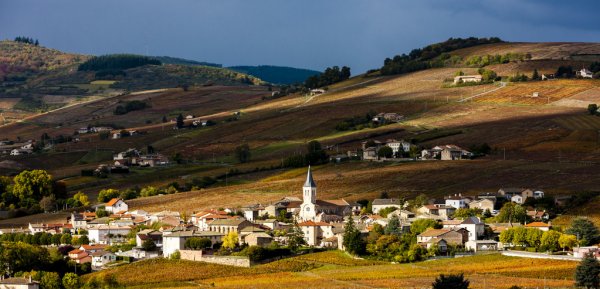
 The Champagne wine region is a historic province within the administrative province of Champagne in the northeast of France. The area is best known for the production of the sparkling white wine that bears the region’s name. EU law and the laws of most countries reserve the term “Champagne” exclusively for wines that come from this region located about 100 miles (160 km) east of Paris. The viti-cultural boundaries of Champagne are legally defined and split into five wine producing districts within the administrative province: Aube, Côte des Blancs, Côte de Sézanne, Montagne de Reims, and Vallée de la Marne. The towns of Reims and Épernay are the commercial centers of the area.
Located at the northern edges of the wine growing world, the history of the Champagne wine region has had a significant role in the development of this unique terroir. The area’s proximity to Paris promoted the region’s economic success in its wine trade but also put the villages and vineyards in the path of marching armies on their way to the French capital. Despite the frequency of these military conflicts, the region developed a reputation for quality wine production in the early Middle Ages and was able to continue that reputation as the region’s producers began making sparkling wine with the advent of the great Champagne houses in the 17th & 18th centuries. The principal grapes grown in the region include Chardonnay, Pinot Noir, and Pinot Meunier. Pinot Noir is the most widely planted grape in the Aube region and grows very well in Montagne de Reims. Pinot Meunier is the dominant grape in the Vallée de la Marne region. The Côte des Blancs is dedicated almost exclusively to Chardonnay.
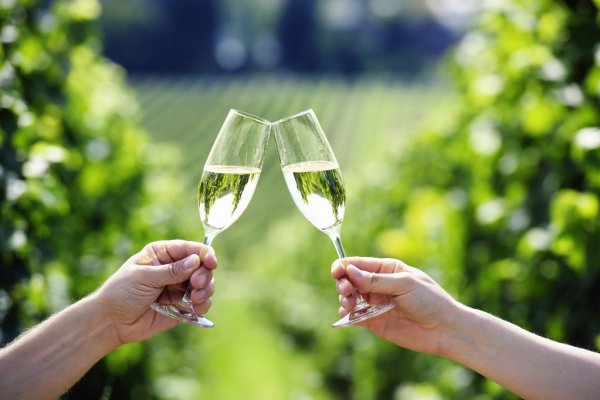
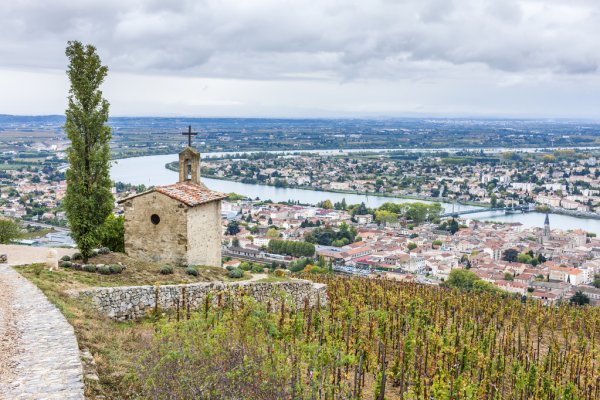 Wine has been produced in the Rhône Valley for over 500 years, with some of the vineyards being amongst the oldest in France. Syrah rules, or the south with a mix of Mediterranean grapes. In the north, the two stars are: Hermitage, grown on an imposing granite hillside above the town of Tain and best put away in the back of the cellar for a decade; and Côte Rôtie, a star appellation made famous by Guigal’s single-vineyard wines, yet home to dozens of fine producers as yet less well known. The sheer hillsides overlooking the river have to be terraced to make production possible.
St Joseph and Cornas also provide wines of weight and worth, but the best source for good value is Crozes-Hermitage, a satellite appellation which has come alive in the last few years with the arrival of young blood.
The river valley widens out south of Valence into Côtes du Rhône country on the windy alluvial plains and the lower slopes of the hills. It is a most imposing sight during the cold, clear, blue skies of Mistral conditions. The best of the wine villages of the Côtes du Rhône have been promoted to their own appellations – Vinsobres, Vacqueyras – close in quality to the better known Gigondas.
The king of the southern Rhône is Châteauneuf-du-Pape. Here the galets roulés, rounded rocks from the ancient river bed, provide the context for gloriously rich red wines, redolent of the heat and the herbs of the south, enhanced by the complexity which comes from blending several grape varieties. Thirteen are permitted in all, but Grenache usually dominates, along with Syrah and Mourvèdre in support. A fine vintage needs eight to 10 years cellaring for best results.
If your taste runs to fuller, richer, relatively exotic white wines, then perhaps a white Hermitage or Châteauneuf-du-Pape from the Rhône Valley would suit better – or else a marvelously perfumed, heady Condrieu, headquarters of the Viognier grape.
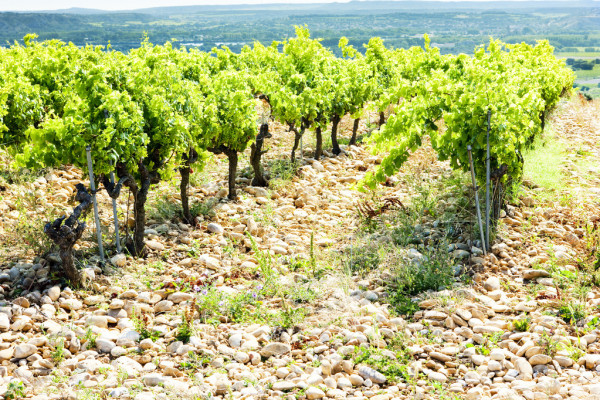
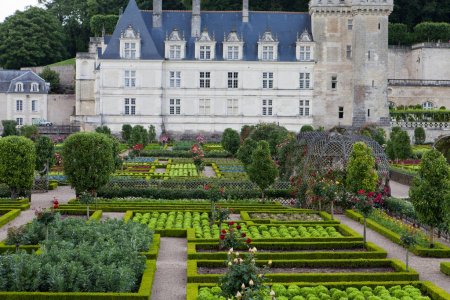 Located between the centre & northwest of France, the Loire is home to some of France’s most famous wines, notably Sancerre, Pouilly-Fume, Muscadet and Vouvray.
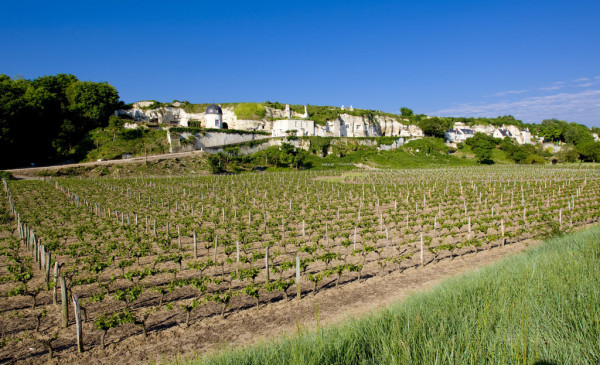
Its trade and vinous history intrinsically linked to the 600 mile long river, ‘La Loire’, whose flow from its source in the Massif Central near Clermont-Ferrand to Nantes (via Nevers, Orleans, & Tours) has thrown up a rich diversity of terroirs while crossing several climatic zones.
Following on from the Romans and the Gauls, it was the Dutch burghers who exploited the waterway during the 12th century. The proximity of Paris assured a ready market for many centuries, though the region’s once dependable domestic market is now under threat from falling consumption. While on the export market their position is being challenged by new world offerings.
The region accounts for approx 8% of France’s vineyards, of which 40% is planted with Melon de Bourgogne (Muscadet), 23% with Cabernet Franc (Chinon, Saumur-Champigny, Bourgueil), 13% Chenin Blanc (Vouvray, Montlouis, Savennieres, Anjou, Saumur, Bonnezeaux, Coteaux du Layon), 10% Sauvignon Blanc (Touraine, Sancerre, Pouilly-Fume, Menetou-Salon, Reuilly and Quincy), and 8% Gamay (Touraine).
The spread of climates ranges from the continental centre (Sancerre, Pouilly-Fume etc.) to the more Atlantic influenced semi-continental Touraine and Anjou zones (Touraine, Vouvray, Chinon, Bourgueil, Savennieres, Bonnezeaux) and finally to the maritime breezes over Muscadet on the Atlantic coast.
In terms of terroir, at Poully-sur-Loire, exactly halfway along its course, the river has cut a swath through the land, revealing steep slopes and rich Kimmeridgean clay deposits; near identical to those found at Chablis an hour’s drive east. Framed by a continental climate, the style of Sauvignon Blancs of Pouilly-Fume and Sancerre tend to be fuller-bodied and minerally rich; the former possessing the greater, stonier limestone expression.
Andre Dezat, Francois Cotat, Vincent Pinard, Alain Cailbourdin and Nicolas Gaudry are fine addresses. West of Sancerre, away from the river, a singular calcareous outcrop lies behind the Menetou-Salon; more clay rich and hence fleshy wines at Reuilly. While Quincy’s fresh, zippy style is down to more sand and quartz. Jean-Michel Sorbe is a good source here. Sancerre Pinot Noir is also feature, though sadly often compromised by sacrificing its juice to make Rose wine.
Further downstream and now west, once the river has turned the corner at Orleans, the land levels out to give undulating sandy clay flats of the Touraine, giving straightforward lighter Sauvignon Blancs in the main; Domaine Jean-Marie Penet is a very good producer. Closer to to Tours however starchy cliffs announce chalky ‘tuffeau’ soils; prime building material as well as central to the floral Chenin Blancs of Vouvray and less so of Montlouis. Domaine Bourillon Dorleans, Francois Chidaine and Gaston Huet are top producers. Touraine is also home to the region’s sparkling Cremant de Loire, made in a traditional method using predominantly Chenin Blanc.
Cabernet Franc makes its fine wine debut between Tours and Angers, initially as Saumur-Champigny, the subsoil imparting a lighter, chalky-tannined and black fruit expression; Ch. du Hureau are consistently good. While further on and downstream, the river valley broadens and flattens to feature gentle sandy clay rich terraces. Consequently Chinon and Bourgueil offer fuller, richer and more complex Cab. Francs; especially those of Jacky Blot, Charles Joguet and Domaine de la Chevalerie.
At Angers the soil profile changes significantly from the hitherto, younger chalky-limestone to an ancient schistous rock. This now underpins the majestic, richly structured dry Chenin Blancs of Savennieres (see Domaine du Closel and the Coulee de Serrant) as well as the sweet botrytised, honeyed beauties of Bonnezeaux and the Coteaux du Layon; Domaine de la Petit Metris and Domaine des Forges are top producers.
Finally, just before reaching the mouth of the river, the soil undergoes one final, subtle twist: granitic knolls rise up among the schistous swathe of Melon de Bourgogne vineyards to give the tangiest Muscadets, the best identified as those from Sevre et Maine; Ch. du Cleray produce such a wine.
The dry Sauvignons, Chenins and Melons tend to be unoaked, with their malic acid still intact and bottled after 7 months to retain maximum freshness. For the Muscadets, ‘Sur Lie’ indicates extended lees ageing and hence more complexity. The better Cabernet Francs are aged in French barriques and tend to be bottled a year after the harvest. Off-dry and sweet Chenin Blancs are fermented and aged in French barriques, with varying amounts of residual sugar.
ITALY
 Wine and Italy have been entwined since Romulus and Remus, albeit viewed a one of life’s necessities rather than something to be treasured. Yes, they were celebrated by Virgil, Pliny and Columella, toasted by the Vatican and, in the case of Barolo, coveted in the latter part of the 19th century by the then monarchy, the House of Savoia, but only in the last 20 – 30 years have the great fine wines of Italy come of age.
Forced by sliding domestic consumption (a 50% drop in 30 years), spurred on by a new generation (often with professional backgrounds) and facilitated by consultants and the latest gizmos, Italy’s hillside terroirs are finally being harnessed to great effect.
However, for example, while Barolo’s stature as Italy’s finest wine may be global, its vineyards are 1% those of Bordeaux and 15% the size of Burgundy. Where top Chateau in the Medoc might produce 40,000 cases per annum of a Grand Vin, a leading Barolo estate makes 800 cases.
Tuscany and the Veneto come close to representing Italy’s fine wine engine, with their Chiantis and Valpolicellas, but the bulk (both literally and metaphorically) of Italian production still resides elsewhere. The massive cooperatives of Emilia-Romagna, Puglia and Sicily are still responsible for churning out vast quantities, mostly as blending material for wines based all round Europe….yet even here the worm is turning, with small estates bubbling to the surface.
As in France, so in Italy the best vineyard sites have been planted for two millennia, mostly on limestone based soils delivering low pH wines, often perched among the Apennine or Alpine foothills, 300 – 600 metres above sea level to enjoy the important diurnal shift that prolongs hang-time and builds complexity in their ancient grape varieties.
While the Cabernets and Merlots so prized by the ‘Super-Tuscans’ (Tignanello, Solaia) are gradually wheedling their way into formerly indigenous-only blends such as the Chiantis and Vino Nobiles (and Brunello given half-a-chance), it is the autochthonous pearls of Italy’s rich wine culture that are increasingly cited: the Nebbiolos of Piedmont, Corvinas of the Veneto, the Sangiovese of Tuscany, the Primitivos of Puglia, Verdicchios of the Marche, Pinot Grigio in Friuli etc.
For with the next generation has come a realisation of what differentiates Italy from the vinous crowd and why the quality of their Nebbiolo, Sangiovese, and Corvina-based wines have yet to be replicated anywhere else in the world. And with an unprecedented string of good to great vintages (1995-2001, 2004, 2006) encouraging and urging them on to new heights, there’s never been a better time to savour these increasingly modern classics.
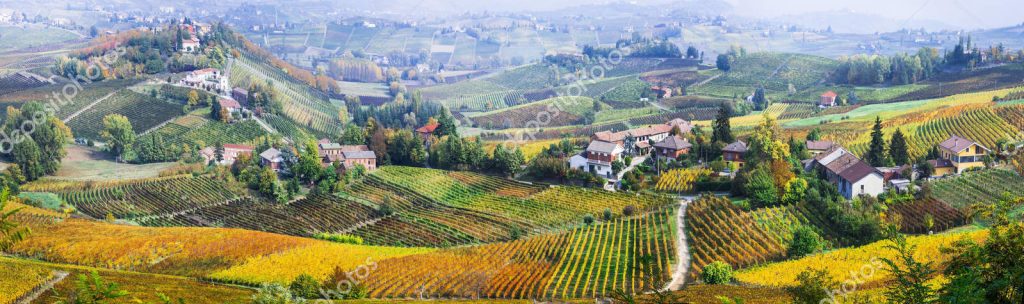
Piedmont, the pre-eminent fine wine province of Italy since Roman times, an this was reinforced under the House of Savoy which lorded it over Europe during the Middle Ages from their base in Turin. Piedmont’s fame increased too as this noble House secured their place in history as the driver for Italian Reunification in 1861.
Located in the north-west of the country with a continental climate, Piedmont is influenced culturally and climatically by the surrounding Alps and Ligurian Apennines. Piedmont’s most important fine wine regions are: Langhe, south of Alba, incorporating Barolo and Barbaresco; Monferrato, comprising the wines of Asti and Gavi; and Novara with its Colline Novaresi and Boca.
Nebbiolo is the grape of Piedmont, and arguably the whole country. It is planted in only the most favourable sites and is the power behind Barolo and Barbaresco. It is followed by Barbera d’Alba or Barbera d’Asti andDolcetto, an early ripening antipasti wine produced more seriously around Dogliani. For whites, Moscato is queen, responsible for copious amounts of frizzante more commonly known as Asti. A far more rewarding gently sparkling wine, made in an off-dry style, is labelled as Moscato d’Asti.
By the 18th century, individual properties – known as châteaux, however humble – were becoming known for the quality of their wines and in 1855, those of the Médoc (plus Haut Brion, a property commended by Samuel Pepys as early as 1663) were classified into five levels of classed growths. Lafite, Latour, Margaux and Haut Brion were cited as First Growths, to whose ranks Mouton Rothschild was elevated by presidential decree in 1973. Beneath the ranks of the classed growths lies a raft of fine châteaux known as Crus Bourgeois, while a host of less well known “petits châteaux” still makes attractive, enjoyable claret at affordable prices.
A notable red version is also made: Brachetto d’Acqui. Cortese is the white grape behind the region’s most popular dry white wine, Gavi, from vines south of Alessandria. Perhaps not surprisingly Piedmont has the highest proportion of DOC and DOCG wines even if it is responsible for only 7% of Italy’s total production (2006).
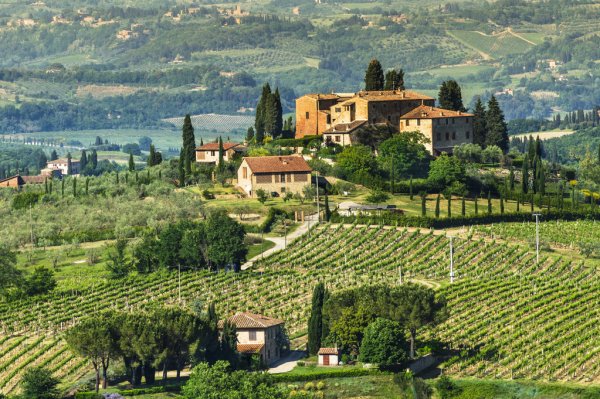 Responsible for only 6% of Italy’s total wine production in 2006 (half that of the Veneto) Tuscany may not be a heavyweight in terms of quantity, but as the home of two of the country’s most famous fine wines – Chianti and Brunello di Montalcino – it certainly is in terms of quality.
Tuscany is Italy’s most ancient wine region dating back to the 8th century BC when the Etruscans developed the area in parallel with the Greeks before ceding to the Romans. Along with building roads and sewers, they developed the region’s viticultural potential, using wood for winemaking rather than amphorae, and passing their expertise onto their French neighbors. With the demise of Rome in the 5th century AD the Longobards established Lucca as the capital of what was then known as Tuscia. Firenze (Florence) and Siena became banking and trading hubs during the Middle Ages, with Chianti (then a white wine) first documented in the 14th century.
Tuscany passed from the Medicis to the Hapsburgs as part of the Holy Roman Empire and then onto the Austrian Empire before becoming part of a reunified Italy in 1861. The quality of Chianti was first recognized by the Grand Duke of Tuscany, Cosimo III, who classified its finest areas in 1716.
Located in the west-central part of the country with the Tyrrhenian Sea on its coast, Tuscany’s climate ranges from Mediterranean on the coast to Continental deep in the Apennines. More than two-thirds of the province is covered with hills, an important terroir factor in the production of fine Tuscan wine. The finest areas are Chianti Classico, Chianti Rufina, Brunello di Montalcino, Vino Nobile di Montepulciano, Morellino di Scansano and Bolgheri. Sangiovese (in its various clones) is the black grape of choice.
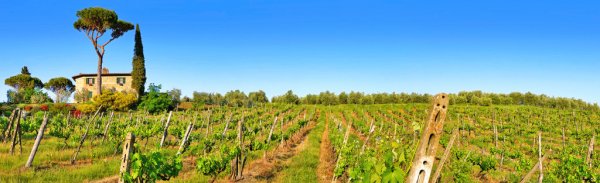
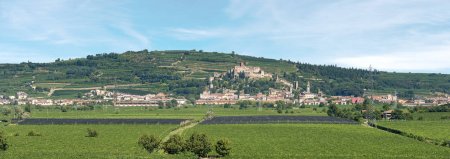
Situated in the north-east of the country, Veneto is the Italy’s largest producer of fine wine, responsible for around 14% of total production (2006). Venetian viticulture was celebrated as far back as Roman times by Pliny and Virgil on the strength of its ‘Recitum’ (possibly Recioto). The region’s reputation was crowned during the Serenissima Republic (800-1800 AD) as Venice and Verona profited from its position on the silk route. As elsewhere in Italy a triple whammy of phylloxera, World Wars and republicanism saw the floodgates open and cooperatives take over.
The Veneto is still Italy’s third largest wine-producing province (mostly from the plains of Piave behind Venice) with quantity rather than quality the order of the day. Nevertheless, the 1990s witnessed considerable investment and progress in fine wine production; today the wines are better than ever, even if the risk of hail dogs each vintage.
The foothills of the Lessini Mountains north of Verona are home to the famous and potentially outstanding red Valpolicella Classico, Ripasso, Amarone and Recioto made from Corvina, Corvinone, Rondinella and increasingly Croatina.
Garganega is the grape behind the best white DOCs, Bianco di Custoza and Soave, while further north and east towards the Alps lie.
The Conegliano hills, home to the Prosecco grape and its eponymous sparkling wine.
Spain
For so long, Spain was regarded as a source of inexpensive red wine with only Rioja standing above the parapet. Now there is a plethora of interesting wines in many different styles.
Exciting fresh whites, especially from the Albarino in the Rias Baixas and Verdejo in Rueda, but also with Viura in Rioja, have extended the choice. There have also been interesting developments in that most classical of all wine regions, Jerez, the home of sherry – not so much in modernization of production, but in developing small scale bottling of the highest quality sherry at amazingly affordable prices.
Modern techniques and a new appreciation of what might be possible have encouraged pioneers to produce some startlingly attractive reds. There are thoroughly competent wines from La Mancha now and some striking bottling of Monastrell (known elsewhere as Mataro or Mourvèdre) in Jumilla.
Thankfully, the modernisation of the pedestrian has not held back successful traditional styles of wine. Alongside such modernists as Palacios Remondo and Allende in Rioja, long established houses like La Rioja Alta and CVNE continue to make graceful, old-style wines contingent upon several years barrel ageing before further maturation in the bottle. These Reserva and Gran Reserva wines have the gentle fragrance of well-seasoned fruit in partnership with a dash of vanilla oak. There are also subtle differences between regions of Rioja and in the precise makeup of the grape mix, Garnacha and Mazuelo supporting the dominant Tempranillo.
The only challenger to Rioja’s claim to red wine supremacy is the Ribera del Duero, where the same red grape, Tempranillo, defines the wines, though known here as Tinto Fino. Most magisterial of all producers is Vega Sicilia whose Unico wines are not released onto the market before a minimum of 10 years – including at least seven years of barrel ageing.
The Penedès wine-making region in Spain is tucked away between coastal hills, southwest of Barcelona in Catalonia and to the north-east of the other historic wine-making region of Tarragona.
Penedès fame rests chiefly on its Cava sparkling wine (which was awarded its own Denomination d’Origen in 1991). White grape varieties dominate, but the region also offers a host of well-made red wines, although in this category it has yet to catch up – in status and prices- with its illustrious neighbor Priorat.
In the 1960s and 1970s Penedès wines were revolutionised through the efforts of Miguel Torres Carbo and his son Miguel A. Torres, the now internationally famous wine (and brandy) producers in the heart of the region at Vilafranca del Penedès.
Torres are credited with the modernization of the wine-making in the region (being the first to introduce temperature-controlled fermentation and maturation in small oak casks), as well as with the successful experimentation with international grape varieties such as Cabernet Sauvignon, Chardonnay, Sauvignon Blanc, Merlot, Pinot Noir, Riesling and Gewürztraminer.
Rioja is known primarily for its reds although it also makes white wines from the Viura and Malvasia grapes and rosés mainly from Garnacha. Most wineries (bodegas) have their own distinct red wine formula, but are normally a combination of Tempranillo, Garnacha and sometimes Graciano. Other red varieties recently approved into the DOCa regulations are the little known Maturana Tinta, Maturana Parda, and Monastel (not Monastrell). The most important of these by far is the king of native Spanish varieties, Tempranillo, which imbues the wines with complex and concentrated fruit flavors
The Garnacha, meanwhile, bestows the wines with warm, ripe fruit and adds an alcohol punch. Graciano is an ameliorateur grape (one that is added, often in small proportions, to add a little something to the final blend) and is found mainly in Reserva and Gran Reserva wines, albeit in small quantities (2%-5%), adding freshness, aroma and enhancing the wines’ ageing potential.
Crianza wines are aged for 1 year in oak followed by maturation for 1 year in bottle before being released for sale. Reservas must spend a minimum of 3 years ageing before release, at least one of which should be in oak casks. Finally, Gran Reservas, which are only produced in the finest vintages, must spend at least 5 years maturing, of which at least two must be in oak.
Geographically, Rioja is divided in to three districts: Alavesa, Alta and Baja. Rioja Alavesa lies in the northwest of the La Rioja region in the Basque province of Alava. Along with Rioja Alta, it is the heartland of the Tempranillo grape. Rioja Alta, to the north-west and south of the Ebro River in the province of La Rioja, stretches as far as the city of Logroño. Elegance and poise is the hallmark of wines made here with Rioja Alta Tempranillo. Mazuelo (Carignan) is occasionally added to wines from this area to add tannins and colour. Rioja Baja is located to the south-east, is the hottest of the three districts and specialises in Garnacha.
Rioja has witnessed a broad stylistic evolution over the years. The classic Riojas pioneered by Murrieta and Riscal in the 19th century were distinguished by long oak barrel ageing whereas the modern style, represented by Marques de Caceres since 1970, showcases the fruit and freshness of Tempranillo, keeping oak ageing to the legal minimum. The post-modern school that emerged in the late 1990s from producers like Palacios Remondo and Finca Allende concentrate on making wines from old vines or specific vineyard plots to accentuate the terroir, and using larger proportions of minority varietals such as Graciano.
The `alta expression’ wines, pioneered by Finca Allende (among others) and later taken up by almost every other producer in Rioja, represent the new flagship category in Rioja. Alongside the traditional Gran Reservas, alta expression wines are limited production and come from low-yielding vines, often from a single vineyard, and are hand-picked. Excellent examples of this style are Artadi’s Pagos Viejos and El Pison.
However, modernization has not held back the continuation of successful traditional styles as well. Happily, long-established houses such as La Rioja Alta, CVNE and Marques de Vargas continue to make graceful, old style wines better than ever before.
White Rioja is typically produced by the Viura grape which must comprise at leasr 51% of the blend; the rest can be made up by other, recently authorised varieties, namely, Sauvignon Blanc, Chardonnay and Verdejo, as well as the native Maturana Blanca, Tempranillo Blanco, and Turruntés (not Torrontés).
Germany
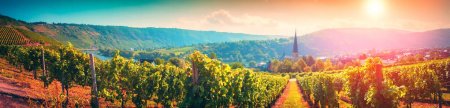
The 100,000ha of German vineyards produce some of the world’s greatest white wines from the Riesling grape. With a run of excellent vintages, top estate wines are at last fashionable and Riesling is finally getting the acknowledgment it deserves. Its touch of sweetness is underpinned by a racy acidity and a fresh purity of the fruit.
Germany is the seventh largest wine producer in the world. Its vineyards are centred around the major rivers, the Rhine and the Mosel as well as their tributaries. The continental climate with hot summers, cold winters and long, warm autumns are perfect for late-harvest wines. The finest wines are produced on steep, often terraced, south-facing vineyards close to rivers. The maintenance and the harvesting of the vines are often done by hand.
White grapes make up 85% of plantings, but reds are increasing. Riesling has a knack of maintaining its varietal character while reflecting the terroir of its site, so while all German Rieslings have that balance of nerve-tingling pure fruit and refreshing acidity, there are definite regional differences.
The steep slatey slopes of the Mosel Valley produce the lightest, most minerally Rieslings, with firm, steely examples coming from its tributaries, the Saar and Ruwer. The south-facing slopes of the Rheingau are drier and sunnier, so the wines are fuller. The underrated Nahe lies in between the Mosel and Rheingau both stylistically and geographically, while the large Rheinhessen region can produce firm, full and racy Rieslings.
The Pfalz region further south is warmer, so the wines are richer. Traditional wines have a degree of sweetness but there has been a move to dry and medium dry styles (Trocken and Halbtrocken), making up 40% of production.
Australia
 Australia has come to represent the most ‘successful’ New World producer to date, the benchmark by which other new world producing countries have come to judge themselves. It has been achieved however not without significant cost to a industry which has been forced to consolidate in every decreasing circles in order to keep the wheels from falling off the Brand Australia juggernaut. In 2003/4, twenty businesses accounted for 86% of all production. The prize has been a 24% share of the UK market (& a rapidly improving one in the USA), a position it ironically held ‘before the Wars’ as a supplier of fortified ‘Empire wine’.
Commercial viticulture was established during the early part of the 19th century, with South Australia the last to plant in the 1840s before quickly establishing itself as the major source of fortified wine. A post (WWII) move towards consumption of still dry table, encouraged by the stream of immigrants, was accelerated by the introduction of (German) pressured fermentation vats, stainless-steel & refrigeration units during the 1970s, enabling the winemaker to ferment to dryness. At the same time, French barrels made their debut, adding complexity & a premium allure, while fruit from the likes of new cooler zones of Coonawarra & Padthaway facilitated a lighter style to be made.
These seismic improvements were not lost on the UK market, itself in near revolution during the early ’80s as Thatcher’s government bounced the economy back to life. With Neighbors dominating the airwaves, supermarkets were given carte blanche to spread far & wide, immediately creating a demand for a new style of wine, a brand; consumers only too willing to move from Bulgarian plonk to an Aussie fruit bomb (especially one with an Emu on the label). The Australians grasped the opportunity, only too willing to supply the right product at the right price, supported by aggressive pricing & discounts. On the supply side, the structure of their industry allowed them to cross-border blend & so maximizes production. Corporate consolidation further improved their effectiveness to compete on volume yet has not hitherto allowed them to grow sales value.
TOnly the ramifications of a current chronic seven year ‘dry’/drought, with saline levels at unprecedentedly high levels & the evaporation of the Murray Darling River (S.Australia’s only real source of irrigation since viticulture began) to a virtual trickle has prompted the AWBC (Australian Wine & Brandy Corp.) to finally inflict water quotas. And yet even when an oversupply still exists, key Australian brands are now being forced to import wine from the likes of Chile to meet demand. 40% of wineries are running at a loss, largely the result of over-capitalization.
Meanwhile there’s a significant minority of winegrowers making regionally expressive, terroir wines of real distinction clamoring to make themselves heard; unfortunately it is the corporate not them that control how the marketing budget is spent; the big five being Fosters Wine Estates (Wolf Blass, Penfolds, Rosemount, Lindemans), Hardys Wine Co. (Banrock Station, Leasingham), Orlando Wyndham (Jacob’s Creek), McGuigan Simeon, Casella Wines (Yellow Tail). Maybe global warming will have the final say.
Though blending away regional differences has essentially been key to Australia’s brands competing, there is a range of regional styles clearly defined & demanding recognition, notably: Barossa Valley Shiraz, Eden Valley Riesling, McLaren Vale Shiraz & Cabernet Sauvignon, Langhorne Creek Cabernet Sauvignon, Coonawarra Cabernet Sauvignon, Wrattonbully Cabernet Sauvignon, Clare Valley Riesling, Adelaide Hills Chardonnay, Yarra Valley Pinot Noir, Hunter Valley Semillon, Margaret Valley Cabernet Sauvignon.
Climatically the continent could be divided into two: a tropical weather pattern affecting New South Wales & north, while the southern half of the country, covering the key viticultural states of W Australia, S. Australia, Victoria & Tasmania, enjoys a less extreme band of warm to hot weather oscillating between 25 – 35 celsius. But without the cool oceans enjoyed by California or mountain ranges of Italy, the climate does not benefit from significant diurnal shifts in temperature (between day and night). There are however notable cooler spots such as Barossa Valley, Clare Valley, Eden Valley, Coonawarra, Wrattonbully, Adelaide Hills, Macedon Ranges, Yarra Valley, Tasmania. High relative humidity (55%) seems to be a prerequisite for successful photosynthesis in these climes.’
Of the 167,000 ha, producing 14.3hl of wine, in 2005, the state of South Australia accounts for 43% of the vineyard area (Riverland, Barossa Valley, McLaren Vale); New South Wales 24% (Riverina, Murray Darling, Hunter Valley); Victoria 23% (Heathcote, Swan Hill, Yarra Valley); Western Australia 8% (Margaret River, Great Southern).
At 72,000 ha, South Australia is the ‘engine room’ of the country’s wine industry, responsible for 43% of its vineyards and encompassing some of Australia’s most famous fine wine regions.
One of the most important quality areas is the Barossa Valley, beginning 50km north-east of Adelaide, famous for its full-bodied Shiraz, as well as for its Grenache and Mourvèdre. To the east, the cool Eden Valley is home to some really fine Riesling and some top-class Shiraz, such as that made by Henschke. To the north of Barossa is the Clare Valley, also a source of good Riesling but home to well-structured reds as well.
South-east of Adelaide lies the delightful vineyard area of the Adelaide Hills, where fine Sauvignon, Chardonnay, Riesling and Pinot Noir are produced by wineries such as Petaluma and Llangibby Estate. Langhorne Creek to the east of Adelaide has earned a reputation for its Cabernet Sauvignon, Verdelho, Shiraz. Between Adelaide and the sea, McLaren Vale is a noted area for red wines.
The unique vineyard region of Coonawarra lies 400km south east in an area of pure limestone topped by a red, loose topsoil. Cool enough to resemble Bordeaux, this area produces great Cabernets and Merlots and is much in demand. Slightly to the north and to the west lie the regions of Padthaway and Mount Benson respectively which enjoy similar success as a source of great white wines, esp. Chardonnay. Wrattonbully is known for its fresh varietally pure Cabernet Sauvignon and Merlot.
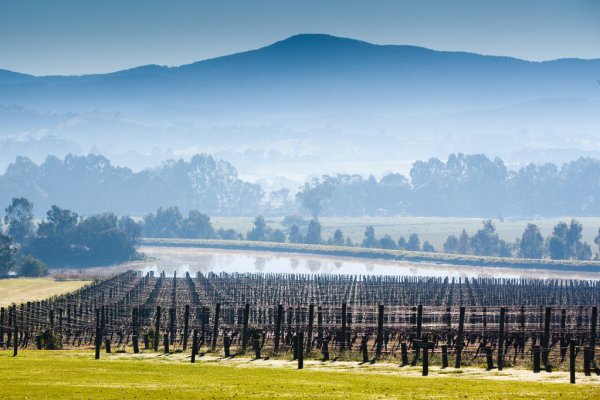 After South Australia and New South Wales, Victoria is the country’s third most important viticultural state, responsible for 23% of the vines. Notable fine wine regions include the Yarra Valley (Pinot Noir prime spot), Sunbury (Chardonnay, Shiraz), Heathcote (Shiraz), Macedon Ranges (Pinot Noir), Rutherglen (Liqueur Muscats).
Victoria has a long history of vineyard settlements, although much was destroyed by phylloxera in the late 19th century. Apart from hot Rutherglen, the Victorian viticultural regions are generally the country’s second coolest after Tasmania. Victoria is the source of excellent sparkling wines as well as a great area for sweet fortified wines such as liqueur Muscat from Rutherglen in north-east Victoria.
Argentina
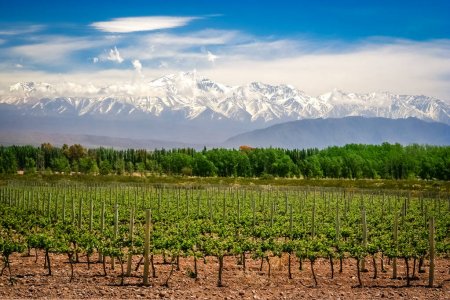 As you would expect from the land of the Tango (the dance, not the drink) Argentina produces “full-blooded”, seductive wines of spice and passion. Like their neighbors across the Andes in Chile, they produce excellent value, mostly red but increasingly white, varietal wines across all price points.
As the 5th largest wine producing nation in the world Argentina was long renowned for the quantity rather than quality of its wines. Since the 1990s Argentina has benefited enormously from the influx of investment and expertise – seemingly from every famous wine region in the world – combined with modern technology and better vineyard management and winemaking techniques. Apart from a couple of blips – notably the 1998 El Niño and the economic crisis of 2001-2 – it has been a heady rise even if a general unwillingness to reduce yields has meant that its progress has been slower than hoped. So far it has emulated Chile’s success but has not yet, by a long chalk, surpassed it.
Planted with vines by the Spanish colonizers in the mid 16th century, it was the widespread immigration from Italy and Spain in the mid-19th century (and later France) that bestowed Argentina with such an eclectic mix of grape varieties. The country’s trump card has turned out to be the old Bordeaux variety Malbec which, outside of Cahors, has never really made its mark in its French homeland. In Argentina it seems to have found its spiritual home, producing intense, opulent wines with refreshing acidity and increasing sophistication.In the hands of top producers and in increasingly good (and high) single vineyard sites it is yielding some truly fine wines.
The underrated Bonarda is Argentina’s second most-planted variety, although the next best qualitatively are the improving Cabernet Sauvignon and Syrah, followed by Merlot, Tempranillo, Sangiovese, Pinot Noir and Barbera. The most interesting whites come from the fruity, floral Torrontés grape, but the there are some very fine wines from the ubiquitous Chardonnay, and it is the latter that looks set to dominate in years to come. Other white varieties include Sauvignon Blanc (in the coolest sites), Chenin Blanc, Sémillon, Pinot Gris and Viognier.
Much of Argentina is semi-desert and very dry and hot, even in the foothills of the Andes; it is only the high altitude of the vineyards and the cooling influence of the mountains that enables quality wines to be made. Irrigation is a must but it is only now that the vital step of limiting this to reduce yields is being followed by more than a small minority.
The region around Mendoza accounts for about 70% of Argentina’s wine production, although cooler, wetter areas like Patagonia in the south and Salta in the far north (home to the world’s highest vineyards at an astonishing 3000m) are increasingly influential even if quantity remains small. Salta produces very good Torrontés and Cabernet Sauvignon, while Patagonia, and particularly Rio Negro, produces elegant whites and structured reds.
In Mendoza, a lot of poor quality wine is still produced for domestic consumption but the sub-region of Luján de Cuyo produces some lovely velvety Malbecs while the cool, gravelly Maipú is best for Cabernet Sauvignon. The most exciting area in Mendoza for fine reds and whites, however, is the Uco Valley 60km south of the city. Its sub-region of Tupungato also produces Argentina’s best Chardonnay.
Chile
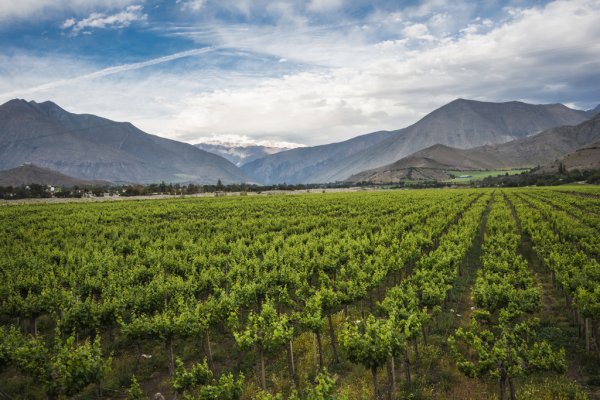 A viticultural paradise with hot, sunny days, chilly nights, little rain and cooling breezes, Chile is famous for being the only wine-producing country free of the devastating phylloxera bug. Despite the rise of Argentina, which produces twice as much wine, Chile remains South America’s (and arguable the world’s) finest source of well-priced, excellent quality varietal wines with sleek, fruity reds and ripe, clean whites. Rosés, sparklers and even sweet wines also do well here. As ambitious winemakers search for better sites (especially higher up and in cooler areas), and constantly improve techniques in the winery and vineyard, some truly fine wines are beginning to emerge. Joint ventures like Almaviva, between Concha y Toro and Mouton-Rothschild, lead the way and many are following.
The vine was introduced to Chile’s Central Valley by the Spanish Conquistadores in the mid-16th century, but 1851 marked the turning point for the Chilean wine industry when Silvestre Ochagavia Echazarreta imported and planted a range of French vine varieties. As phylloxera ravaged Europe, Chile was left as the only country with healthy vines. Political and economic turmoil combined with falling consumption put the brakes on the country’s development in the 1970s and 1980s, but once democracy was restored, investment (both internal and external), equipment and expertise flooded in. With the introduction of temperature-controlled stainless-steel vats, cool storage, and oak barrels, Chile underwent a winemaking revolution.
Chile’s most important red grape is Cabernet Sauvignon, yielding increasingly elegant and concentrated wines and some very good Bordeaux blends. Some have seen the discovery of old Bordeaux grape, Carmenère (aka Grand Vidure) as Chile’s unique selling point, as Malbec is for Argentina. This remains a moot point but long mistaken for Merlot, with which it is still usually blended, Carmenère produces complex, earthy reds with rich, blackcurrant flavours and firm, ripe, tannins.
Chardonnay is the most popular white, especially from cooler regions like the Casablanca and San Antonio valleys. Thanks to a replanting program which saw genuine Sauvignon Blanc replace its lower quality imitators, some excellent examples are now produced, offering a halfway house between the grassy herbaceousness of Sancerre and the piercing, tropical fruit intensity of New Zealand Sauvignon Blanc. Juicy but elegant Pinot Noirs and rich, stylish Syrahs are beginning to make a reputation for themselves while Riesling, Viognier and even Gewurztraminer all show promise.
Hemmed in by the Andes to the east, the Pacific to the west, the Atacama Desert to the north and Antarctica to the south, Chile’s climate is Mediterranean. The only down side is the lack of rain, with irrigation required virtually everywhere. Most of the country’s vines are in the southern half of the country, centered on the 1000km long plateau of the Central Valley south of the capital, Santiago. This area is home to Chile’s most famous region, the hot, dry Maipo Valley with its Napa Valley-like Cabernets and ripe Chardonnays with good acidity.
Further south is the larger Rapel Valley, with its Colchagua, Cachapoal and Apalta sub-regions. This hot region produces succulent, full-flavored reds, the country’s best Merlot and some very fine Cabernets. The Central Valley is also home to the slightly less hot Curicó Valley, and the cooler still and wetter Maule Valley, Chile’s oldest wine region.
Here, and the areas below it at the foot of the Central Valley, Itata, Bío-Bío and Malleco, are Chile’s most undeveloped but also some of its most promising. The hilly, cooler coastal regions of Aconcagua, San Antonio and Casablanca, west and north-west of Santiago, have already shown the way, especially for white wines, with the latter probably producing Chile’s best.
South Africa
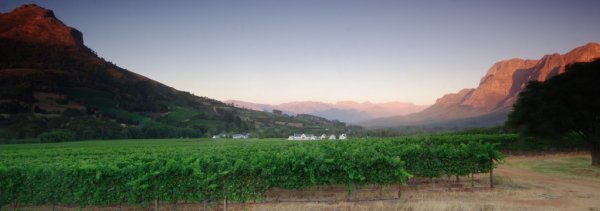
One of the New World’s oldest wine producers dating back to the 17th century & the Dutch East India Company plantings near Table Moutain, South Africa now produces wine from approx. 100,000ha; 40% less than Bordeaux’s total vineyard area.
Since being freed from the shackles of apartheid in 1994, the South African wine industry has blossomed into a nation of 4,000 vineyard smallholders averaging 3ha or less. While this has provided the perfect canvas for a burgeoning wine tourism industry, it has been less helpful when it comes to competing on the world stage where appropriately large wine brands in the mould of Penfolds are required – but in South Africa wine landscape they remain conspicuously absent.
Regrettably, years of underinvestment during the KWV cooperative era has resulted in vineyards ravaged by (leafroll) viruses, perpetuated by a system of grape-growers continuing to supply a number of wine estates; contributing perhaps to the infamous Cape fruit character found in far too many red wines.
60% of South Africa’s wine producers have signed up to the Biodiversity & Wine Initiative (BWI) which advocates sustainable wine production. Nature is certainly on South African wine producers’ side with plenty of sun in this warm Mediterranean climate, tempered by Oceanic onshore breezes. Climate plays a greater role in determining the style and quality of the Cape’s wine, while the predominantly granitic (low pH) soils contributes to a generally fuller, rounder, low acid mouth feel.
Stellenbosch with 17,500 ha is the most important fine wine producing district, followed by Swartland with 15,000 ha and then Paarl at 18,000 ha. Worcester (20,500 ha), Robertson (13,500 ha), Olifants River (10,000 ha) and Orange River (5,000 ha) make up the difference (and ballast).
Newly created wine regions include the coastal Elim (near Cape Agulhas, Africa’s southern-most tip), West Coast, Langloof, and Prince Albert (near the majestic Swartberg – Black Mountain).
The split of white to red wine production was 55/45 in 2005. The white wine grapes are dominated by Chenin Blanc (Steen) with 20% share, with Sauvignon Blanc and Viognier the great white hopes. The red wine grapes are led by Cabernet Sauvignon with 13%, with Merlot and Shiraz close behind.Pinotage, South Africa’s indigenous grape varietal (a cross between Pinot Noir & Cinsaut -spelt “Cinsault” in the Southern Rhône) is at 6% and decreasing.
USA
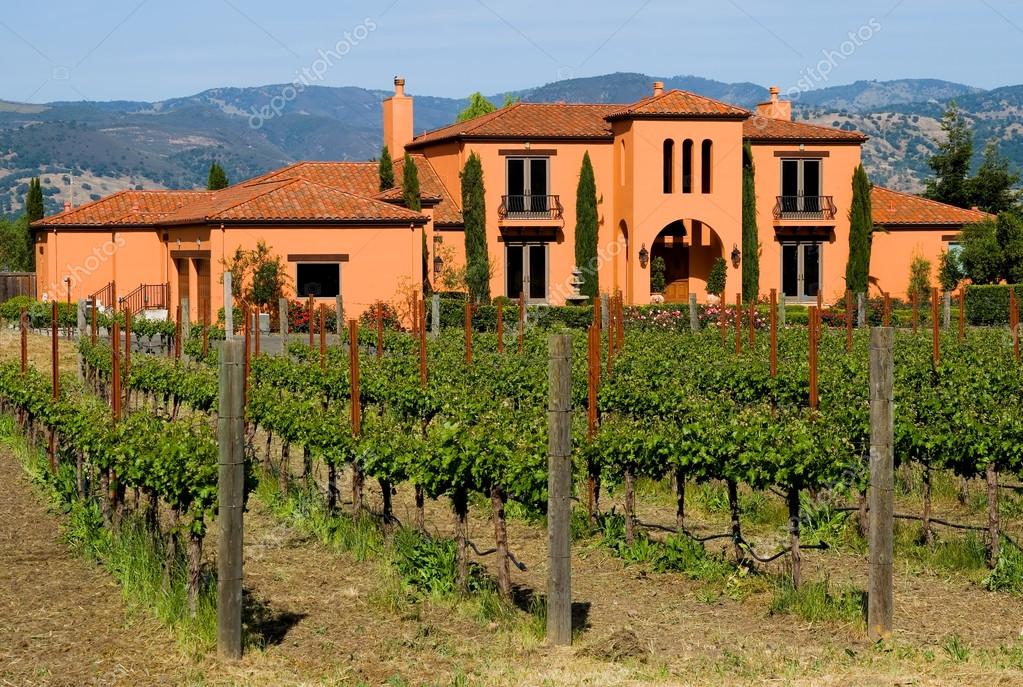 The United States is the world’s 4th largest wine producing nation after France, Italy and Spain, with double the quantity of 5th placed Argentina. California is far and away the country’s most important wine region, accounting for 90% of production. Wine is actually produced in every single one of America’s 50 states, even if Utah, Wyoming and North Dakota have only 12 wineries and just over 35ha of vines between them.
The history of the US wine industry is a thorny one. Try as they might, the early East Coast settlers had little success making wine and had to wait until the mid-19th century for their first commercially successful example: Nicholas Longworth’s famous Sparkling Catawba from Cincinatti, Ohio. The west coast had a climate far more conducive to vine-growing and from its first vineyard (probably Mission) planted in 1769 at San Diego, the wine industry swiftly flourished, boosted by the influx caused by the Gold Rush.
However, the twin blights of mildew and phylloxera at end of the 19th century, followed by Prohibition from 1920 to 1933, set the wine industry back 100 years. Ever since, wine has endured a somewhat uneasy existence, flourishing despite an obstructive distribution system and often tacit government disapproval.
The US boasts every type of producer, from the tiny `garagiste’ producing a couple of barrels of incredibly rare and expensive wine to the monumental producers of cheap brands like Ernst & Julio Gallo who sell 75m cases of wine a year (25% of the total production of the US!). Such progress has largely taken place in the last 40 years through an unquenchable desire for quality, the insistence on the finest expertise and technology, enormous investment and astute marketing.
California produces some of the world’s greatest Cabernet Sauvignon, Merlot, Zinfandel, Pinot Noir and Chardonnay from famous regions like Napa and Sonoma. Recognition of this really dates back to the 1976 Judgment of Paris where the regions finest trounced the cream of French wine in a blind tasting held in Paris.
After California, New York is actually the second biggest wine-producing state; most are made from Concord (often described as `foxy’- and not in a good way) although increasingly Chardonnay too. From a qualitative point of view, however, California’s closest rivals are Washington which specialises in Bordeaux blends, and Oregon which yields some very fine Pinot Noir.
Of the rest, Virginia’s reds from Cabernet and Merlot show potential, while Georgia, Missouri, Texas, Idaho, South Carolina, Pennsylvania and Michigan all have significant plantings, mostly of American hybrid varieties.
Although it doesn’t yet have an Appellation Contrôlée system per se, the concept of American Viticultural Areas (AVAs) was introduced here in 1980. The first was Augusta in Missouri, and they now number 188. They have none of the restrictive rules of the AC system and are all the better for it. 85% of any wine labeled with a given AVA must come from that region. In addition, every state and county is classified as its own appellation.
North Coast’s Napa Valley is California’s most famous viticultural area (AVA), claiming some of the most expensive agricultural land in the world and producing wines of ‘cult’ status.
Its 16,000 ha of vines lie over a strip (40 miles long-5 miles wide) of diverse soils (clay, gravely, volcanic), with its northernmost end on the side of Mountain Helena and its foot in San Francisco Bay. The valley is framed by two mountains ranges Vaca (to the north) and Mayacamas (to the south), yet the main climatic influence is the cool wind and fog that is sucked in from San Pablo Bay during the afternoon, allowing grapes to ripen slowly and evenly.
The area enjoys a variety of unique microclimates, as temperatures can vary dramatically as much as 15 degrees, from the north to the south end of the valley. These differences have led to the creation of several sub-AVAs (14 in total) including:Atlas Peak, Chiles Valley District, Diamond Mountain District, Howell Mountain, Los Carneros, Mt. Veeder, Oakville, Rutherford, St. Helena, Spring Mountain District, Stags Leap District, Yountville, Wild Horse Valley and Oak Knoll District. The Calistoga AVA is still pending approval.
Both the “Napa Valley” designation and the sub-AVA name must appear on the wine label simultaneously, with the exception of wines from the Carneros AVA, which is shared between the Napa Valley and the Sonoma County.Cabernet Sauvignon is the undisputed king of Napa grapes, occupying over 45% of the vineyard acreage, followed by (predominantly) Chardonnay, Sauvignon Blanc, Chenin Blanc, Riesling, Zinfandel, Merlot, Cab. Franc and to a lesser extent Petite Sirah, Sangiovese, Barbera, Dolcetto.