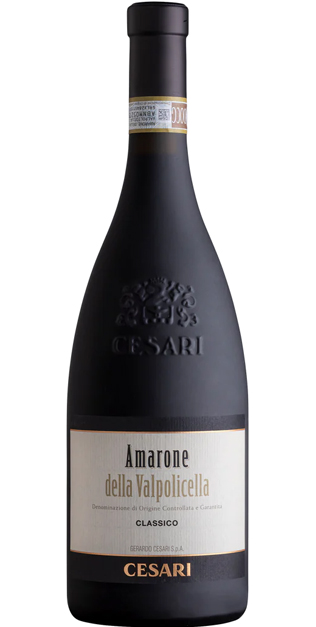
Cesari Amarone della Valpolicella Classico
Intense red ruby colour with purple reflexes. Typical aromas of ripe fruit, preserve and cherry are immediately perceived on first olfactory examination. Striking long finish that lingers on the palate, when the wine displays all its strength through a warm and elegant body.
VARIETIES: Made up of 70-75% Corvina Veronese, 20% Rondinella and 5% Rossignola and Negrara
REGION: Italy / Northern Italy / Veneto / Valpolicella / Amarone della Valpolicella / Amarone della Valpolicella Classico
AGEING: Maturation process lasts three years overall with ageing for 12 months in large barrels, and rest for at least 6-8 months in bottles (Slavonian oak) while 30% of the wine is placed to age in small casks, barriques and tonneaux (French oak)
GUARDING POTENTIAL: Enjoy now or will cellar well up to 15 years
SERVE: Serve at 18 – 20ºC
FITS TO: It is an excellent partner to stew meat, flavoursome risottos and hard mature cheese. Perfect also as a “conversation wine”
VIVINO: Average 4.2 ★★★★✰
___________________________________________________
Amarone della Valpolicella Classico | Range | Gerardo Cesari S.p.A.
Gerardo Cesari fine wines of Verona
Produced in the boroughs of Negrar, Marano di Valpolicella, Sant’Ambrogio, Fumane, San Pietro in Cariano (the historic area of Valpolicella Classico production). The drying on racks of the Corvina, Rondinella and Negrara grapes until mid January and the ageing in large oak barrels and barriques, together with the long period of rest in bottles, allow us to enjoy this great wine. Suitable with red meat, game and also as a dinner closing wine.
Grape varieties made up of 70-75% Corvina Veronese, 20% Rondinella and 5% Rossignola and Negrara. The grapes used in the Amarone production are harvested 1-2 weeks earlier than those for the Valpolicella wine. During the grape harvesting, only perfectly unblemished and healthy clusters are selected and placed in shallow cases in single layers. They are left to dry in selected well-aired locations, called “fruttai”, to avoid being attacked by mould and rot. The drying process lasts until December. During these months the bunches are constantly checked and discarded if damaged. At the end of the drying period, the grapes lose 30% of their weight and their concentration of sugar increases, the essential key to ensure a noteworthy alcoholic level (around 15%) during the following fermentation stage.





 NEDERBURG THE WINEMASTERS PINOTAGE
1 ×
NEDERBURG THE WINEMASTERS PINOTAGE
1 × 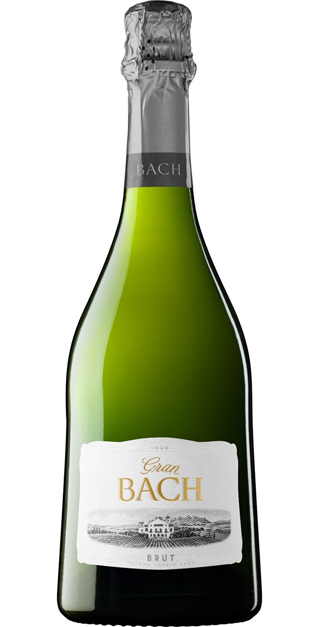 GRAN BACH BRUT CAVA
1 × RM139.00
GRAN BACH BRUT CAVA
1 × RM139.00 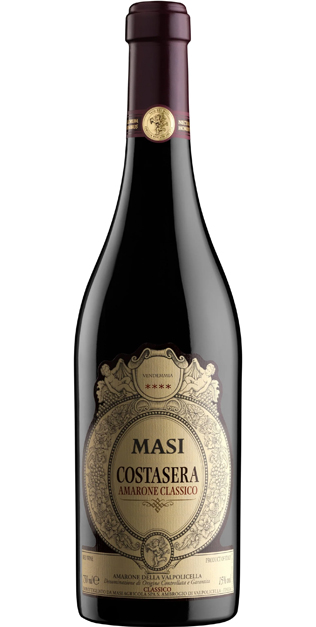 MASI COSTASERA AMARONE CLASSICO
1 ×
MASI COSTASERA AMARONE CLASSICO
1 ×  MASCOTA VINEYARDS LA MASCOTA MALBEC
1 ×
MASCOTA VINEYARDS LA MASCOTA MALBEC
1 ×  FLEUR DU CAP MERLOT
1 ×
FLEUR DU CAP MERLOT
1 ×  INNISKILLIN GOLD VIDAL RESERVE ICEWINE
1 × RM333.00
INNISKILLIN GOLD VIDAL RESERVE ICEWINE
1 × RM333.00 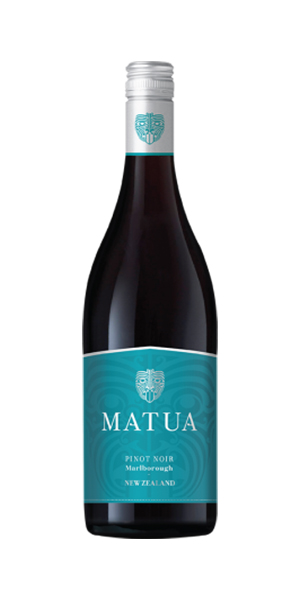 MATUA PINOT NOIR
1 × RM96.90
MATUA PINOT NOIR
1 × RM96.90  NINE STONES BAROSSA VALLEY SHIRAZ
1 ×
NINE STONES BAROSSA VALLEY SHIRAZ
1 ×