



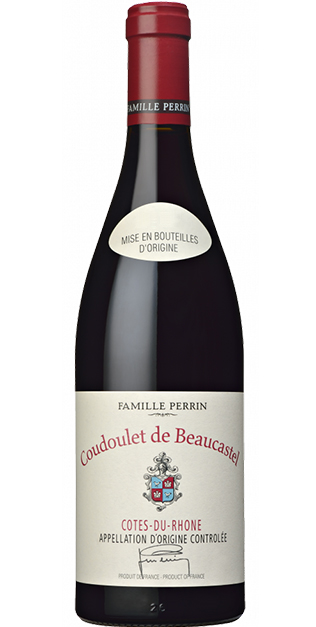
CHÂTEAU DE BEAUCASTEL CÔTES DU RHÔNE COUDOULET ROUGE 2019
| Wine Country | |
|---|---|
| Wine Region | |
| Wine Appellation | |
| Wine Grape Variety | |
| Wine Volume |
Château de Beaucastel
Côtes du Rhône Coudoulet Rouge
Superb deep colour. The complex nose offers notes of ripe fruit, spices and flowers. Full bodied and balanced, the palate is very delicate with magnificent aromas of cherries, plums and liquorice and a long finish. Medium to full-bodied and lusty, with superb concentration as well as purity, it can be drunk now and over the next 10-15 years.
VARIETIES: Mostly Grenache & Mourvèdre 40 – 30% each, with the remainder Syrah & Cinsault 20 – 10% each
REGION: AOC Côtes du Rhône, Vallée du Rhône, France
AGEING: Blending of the different varietals after malolactic fermentation, ageing in Oak Foudres for 6 months
GUARDING POTENTIAL: Enjoy now or will cellar well up to 10 years
SERVE: Serve at 16 – 18ºC
FITS TO: Best served with all types of classic meat dishes, veal, pork, beef, lamb, duck, game, roast chicken, roasted, braised, stewed, grilled dishes, sausage, tomatoes, and cassoulet. Beaucastel Rouge is also good with Asian dishes, hearty fish courses like tuna, mushrooms, and pasta
VIVINO: Average 4.0 ★★★★✰
___________________________________________________
Coudoulet Rouge | Range | Château de Beaucastel – Famille Perrin
The 30 hectares of Coudoulet are located just east of the vineyard of Beaucastel on the other side of the A7 motorway. For reasons that have now become obvious, Coudoulet is often considered the baby Beaucastel. The Coudoulet soil has many similarities to that of Beaucastel. It is made out of Molasse seabed covered by diluvial alpine deposits. These pebbles called “Galets Roulés” play a big role: They take in the heat during the day and let it if off slowly at night which gives a good start to the vines in the Spring.
Beaucastel vineyard has built up its resistance over 30 years of organic farming, which allows the vines to get through these dry periods without too much trouble. In addition, thanks to the porous and aerated soil, Beaucastel’s vines have developed a root system that penetrates deep into the soil and allows them to seek water.
Beaucastel’s terroir is marked by the Rhone violence. It is made with a layer of marine molasses (sandstone) from the Miocene period, covered by alpine alluvium. The presence of a great number of rounded stones, known as « galets », bear evidence of the time when the Rhone, a torrent at this time, tore fragments of rocks from the Alps and deposited them along its course.
Related products